Best Crypto Coins to Watch in 2026
What Are the Best Crypto Coins to Watch in 2026?
The best crypto coins to watch in 2026 include Bitcoin, Ethereum, Solana, Chainlink, Avalanche, Polkadot, Render, and Injective. These projects stand out due to strong adoption, technological innovation, institutional interest, and growing real-world use cases.
Quick Summary: Best Crypto Coins to Watch in 2026
- Bitcoin (BTC) remains the most important crypto asset of 2026, driven by institutional ETF adoption, post-halving supply dynamics, and its growing role as a global store of value.
- Ethereum (ETH) continues to dominate the smart contract space, powering real-world asset tokenization, DeFi, and a thriving Layer 2 ecosystem that has solved its long-standing gas fee problem.
- Solana (SOL) stands out for its speed, near-zero transaction fees, and rapidly expanding consumer-facing ecosystem, making it the top challenger to Ethereum for everyday blockchain applications.
- Chainlink (LINK) provides the critical oracle and cross-chain infrastructure that the entire smart contract industry depends on — its importance only grows as real-world asset tokenization accelerates.
- Avalanche (AVAX) is winning enterprise and institutional clients through its flexible subnet architecture, allowing organizations to run custom blockchains with Avalanche’s security underneath.
- Render (RNDR) sits at the powerful intersection of crypto and AI, offering decentralized GPU computing power at a time when demand for AI infrastructure has never been higher.
- Always do your own research — crypto remains highly volatile, and no coin is a guaranteed investment regardless of its fundamentals or market position.
The cryptocurrency market never stands still. What looked like a speculative bubble to many observers just a few years ago has matured into a global financial infrastructure, with institutional investors, sovereign wealth funds, and retail traders all operating in the same space. As we move through 2026, the landscape is more competitive, more regulated, and more interesting than ever before.
But with thousands of coins and tokens available across dozens of blockchains, knowing where to focus your attention is genuinely difficult. This guide cuts through the noise. Below are the most important crypto coins to watch in 2026 — not because they are guaranteed to rise in price, but because they represent the most significant technological developments, adoption trends, and market opportunities in the space right now.
Why 2026 Is Important Year for Crypto
Several converging factors make 2026 an unusually important year for the cryptocurrency market.
First, the regulatory environment is finally crystallizing. After years of uncertainty, major jurisdictions including the United States, the European Union, and several Asian markets have passed or are implementing comprehensive crypto regulation. This removes one of the biggest barriers to institutional adoption and gives projects with solid fundamentals a significant advantage over those that were built to exploit regulatory grey areas.
Second, the Bitcoin halving that occurred in 2024 has had its full effect on supply dynamics. Historically, the 12 to 18 months following a Bitcoin halving have been among the strongest periods for the broader crypto market. The reduced supply of new Bitcoin entering circulation, combined with sustained or growing demand, creates favorable conditions that tend to lift the entire market.
Third, real-world utility is now the primary differentiator. Projects that can demonstrate genuine adoption — actual users, actual transactions, actual revenue — are separating sharply from those that exist purely as speculative assets. In 2026, the question investors are asking is no longer “could this technology work?” but “is this technology actually being used?”
How We Selected the Best Crypto Coins to Watch in 2026
To identify the most promising crypto projects for 2026, we evaluated each asset based on market relevance, developer activity, real-world adoption, technological innovation, institutional interest, and long-term ecosystem strength. Rather than focusing purely on hype or short-term price predictions, this list prioritizes projects with measurable utility and strategic importance in the blockchain industry.
1. Bitcoin (BTC) — The Undisputed Foundation

No list of coins to watch in 2026 is complete without Bitcoin, and not simply out of tradition. Bitcoin’s role in the cryptocurrency ecosystem has evolved considerably. It is no longer just a peer-to-peer electronic cash system, as its whitepaper described. It is now the primary store-of-value asset in the digital economy, the benchmark against which all other cryptocurrencies are measured, and an increasingly important component of institutional investment portfolios.
The approval of Bitcoin spot ETFs in major markets has opened the asset to a wave of capital that previously had no easy mechanism for exposure. Pension funds, endowments, and wealth management platforms now have straightforward pathways to Bitcoin allocation, and many have taken them. This structural demand shift is arguably the most significant development in Bitcoin’s history since its creation.
In 2026, Bitcoin’s network continues to benefit from the Lightning Network’s expansion, which has dramatically improved its viability for everyday transactions. The combination of a maturing store-of-value narrative, growing institutional infrastructure, and improving transactional utility makes Bitcoin the most important crypto asset to watch regardless of short-term price volatility.
2. Ethereum (ETH) — The Smart Contract Backbone
Ethereum remains the most important programmable blockchain in the world by virtually every metric: total value locked in decentralized finance protocols, number of active developers, volume of NFT and tokenization activity, and breadth of the ecosystem built on top of it. After completing its transition to proof-of-stake with The Merge, Ethereum became dramatically more energy-efficient while introducing deflationary mechanics that reduce ETH supply over time.
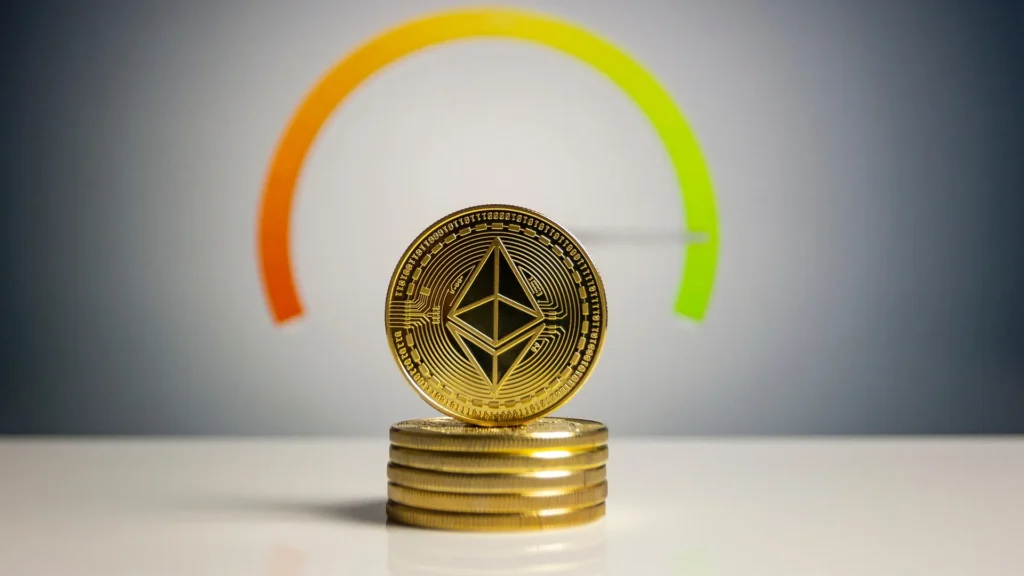
In 2026, Ethereum’s continued development through its roadmap — including improvements to scalability through sharding and further reductions in transaction costs — is a central story in the crypto space. The proliferation of Layer 2 networks built on Ethereum, including Arbitrum, Optimism, and Base, has addressed the gas fee problem that held back adoption during peak congestion periods.
What makes Ethereum particularly compelling to watch is the scale of real-world asset tokenization now occurring on its network. Government bonds, real estate, private equity, and commodities are being represented as tokens on Ethereum-based infrastructure, bringing traditional finance and decentralized infrastructure into direct contact for the first time at meaningful scale.
3. Solana (SOL) — Speed, Scale, and Ecosystem Growth
Solana has firmly established itself as the leading high-performance blockchain alternative to Ethereum. After navigating significant challenges in previous years, the Solana ecosystem has emerged stronger, with a more diverse validator set, improved network reliability, and an explosion of consumer-facing applications that have attracted millions of users who had never previously interacted with crypto.
The key differentiator for Solana is user experience. Transactions are fast — typically finalizing in under a second — and fees are negligible. These properties have made Solana the preferred platform for applications where user experience matters as much as decentralization, including gaming, social applications, payment systems, and consumer crypto products.
Solana’s mobile strategy, centered on the Saga phone and its broader effort to bring crypto-native functionality to Android devices, represents one of the more ambitious bets in the industry on how mainstream crypto adoption will actually happen. If mobile proves to be the primary onboarding mechanism for the next generation of crypto users — which the evidence increasingly suggests — Solana’s early positioning in that space could prove highly significant.
4. Chainlink (LINK) — The Infrastructure Layer Nobody Talks About Enough
Chainlink is one of the most important projects in cryptocurrency that receives proportionally less attention than its role in the ecosystem deserves. Chainlink provides the oracle infrastructure that connects smart contracts on blockchains to real-world data — price feeds, weather data, sports results, financial market information, and more. Without reliable oracles, smart contracts are limited to on-chain information only, which severely restricts their usefulness for real-world applications.
As the tokenization of real-world assets accelerates through 2026, Chainlink’s infrastructure becomes more critical, not less. Every tokenized bond, every on-chain derivative, every insurance contract that settles based on real-world events needs reliable, manipulation-resistant data feeds. Chainlink’s Cross-Chain Interoperability Protocol (CCIP) is also positioning the project at the center of how different blockchains communicate with each other — another function that becomes more valuable as the multi-chain ecosystem grows.
Chainlink is, in many respects, the picks-and-shovels business of the crypto industry: less exciting than the applications built on top of it, but arguably more essential to the entire ecosystem’s functioning.
5. Avalanche (AVAX) — Enterprise Blockchain and Subnet Architecture
Avalanche has carved out a distinctive position in the market through its subnet architecture, which allows organizations to deploy their own customized blockchains that benefit from Avalanche’s security while maintaining sovereignty over their own parameters — fees, permissioning, virtual machines, and governance. This has made Avalanche particularly attractive to enterprises and institutions that need the benefits of blockchain technology but cannot operate on fully public, permissionless networks for regulatory or compliance reasons.
In 2026, several major financial institutions and government bodies are running or piloting Avalanche-based infrastructure, which has brought a quality of enterprise validation to the project that few blockchain platforms can claim. The combination of a strong DeFi ecosystem on the primary C-Chain, a growing number of institutional subnets, and an active developer community makes Avalanche one of the more well-rounded platforms in the market.
6. Polkadot (DOT) — The Interoperability Vision
Polkadot’s thesis has always been one of the most intellectually compelling in crypto: rather than competing with other blockchains, build the infrastructure that connects them all. Through its parachain architecture, Polkadot allows specialized blockchains to operate in parallel while sharing security and communicating seamlessly. This interoperability vision is increasingly relevant as the multi-chain reality of 2026 makes the ability to move assets and data between ecosystems a genuine technical and commercial priority.
Polkadot’s governance model is also among the most sophisticated in the industry, with on-chain voting mechanisms that give DOT holders real influence over the direction of the protocol. As crypto projects face increasing scrutiny over how decisions are made and by whom, robust and transparent governance is becoming a competitive advantage.
7. Render (RNDR) — Crypto Meets the AI Revolution
One of the most interesting stories in crypto in recent years has been the convergence of decentralized networks with the artificial intelligence industry. Render Network sits at this intersection, providing a decentralized marketplace for GPU computing power — the same resource that AI training and inference require in enormous quantities.
As demand for GPU compute has surged alongside the AI boom, centralized cloud providers have faced capacity constraints and pricing pressures. Render offers an alternative: a distributed network of GPU owners who make their idle capacity available in exchange for RNDR tokens. For AI developers, visual effects studios, and 3D artists who need rendering capacity without committing to expensive cloud contracts, this model offers meaningful advantages.
The AI-crypto convergence is one of the defining themes of 2026’s crypto market, and Render is among the most credible projects positioned at that intersection.
8. Injective (INJ) — DeFi Built for Finance Professionals
Injective is a Layer 1 blockchain built specifically for financial applications — decentralized exchanges, derivatives protocols, prediction markets, and cross-chain DeFi. Unlike general-purpose smart contract platforms that have had financial applications built on top of them somewhat organically, Injective was designed from the ground up with the requirements of financial markets in mind: high throughput, MEV resistance, and native support for complex order types and financial instruments.
The project has attracted significant attention from traders and developers who found that general-purpose blockchains created friction for serious financial applications. Its growing ecosystem of decentralized exchanges and derivatives protocols makes it one of the more interesting DeFi-native chains to watch as institutional participation in on-chain finance increases.
How to Approach Crypto Investment in 2026
Watching these coins and investing in them are two different things, and it is worth being clear about the distinction. Cryptocurrency remains a highly volatile asset class. Prices can move dramatically in short periods, and projects that appear technically sound can still perform poorly in markets driven by sentiment, liquidity, and macroeconomic conditions that have nothing to do with the underlying technology.
A few principles are worth keeping in mind as you evaluate crypto opportunities in 2026. Diversification within the asset class — spreading exposure across different categories of projects rather than concentrating in one — reduces the risk that a single failure causes outsized damage. Position sizing relative to your overall portfolio matters enormously; most financial professionals who allocate to crypto treat it as a high-risk, high-reward component rather than a core holding.
Due diligence is non-negotiable. The quality of a project’s team, the clarity of its technical documentation, the transparency of its tokenomics, and the track record of its development activity are all indicators that patient research can reveal. Projects that avoid scrutiny, make extravagant promises, or have anonymous teams with no verifiable history deserve extreme caution.
Finally, be honest with yourself about your time horizon. Short-term trading in crypto requires a different skill set, risk tolerance, and emotional constitution than long-term holding. Most people who have done well in crypto over multi-year periods have done so not by timing the market but by identifying strong projects early and having the patience to hold through volatility.
Final Thoughts
The cryptocurrency market in 2026 is more mature, more regulated, and more consequential than at any previous point in its history. The coins highlighted in this guide — Bitcoin, Ethereum, Solana, Chainlink, Avalanche, Polkadot, Render, and Injective — represent different facets of what the industry is becoming: a global financial infrastructure layer, an enterprise technology platform, a consumer application ecosystem, and an AI compute marketplace all at once.
None of these are guaranteed investments. All of them represent genuinely interesting projects that are worth understanding, regardless of whether you choose to hold them. In a market defined by noise, the most valuable thing any investor can do is understand what they own and why. This list is a starting point for that work, not a substitute for it.
This article is for informational purposes only and does not constitute financial advice. Always conduct your own research and consult a qualified financial advisor before making investment decisions.
Frequently Asked Questions: Best Crypto Coins to Watch in 2026
There is no single “best” coin for everyone. Bitcoin and Ethereum are the safest starting points due to their established track records and liquidity. Higher-risk, higher-reward options like Solana, Render, and Injective suit investors with a higher risk tolerance and longer time horizon.
Crypto remains a high-risk, high-reward asset class. The market is more mature and regulated than in previous years, which reduces some risks — but price volatility, project failures, and market sentiment swings are still very much part of the landscape. Only invest what you can afford to lose.
Historically, the 12 to 18 months following a Bitcoin halving have been among the strongest periods for the broader crypto market. The reduced supply of new Bitcoin combined with growing institutional demand through ETFs has created favorable conditions that have benefited the wider market through 2025 and into 2026.
Ethereum leads in real-world utility through DeFi, tokenized assets, and enterprise applications. Chainlink is essential infrastructure powering data feeds across virtually every major blockchain. Solana is gaining ground rapidly in consumer applications, payments, and mobile crypto adoption.
Many analysts argue it is never “too late” to invest in Bitcoin given its fixed supply cap of 21 million coins and growing global adoption. However, the era of buying Bitcoin at a few hundred dollars is long gone. The opportunity now lies in its role as a long-term store of value rather than a short-term speculative trade.
Focus on four things: the strength and transparency of the development team, the real-world utility and adoption of the project, the tokenomics and supply structure, and the overall health of the ecosystem built around it. Avoid projects that promise extraordinary returns without clear fundamentals.
Yes. Crypto investments carry significant risk and tax implications that vary by country. A qualified financial advisor can help you determine appropriate position sizing, portfolio allocation, and tax strategy based on your personal financial situation.
Sources & Further Reading
Primary Sources
[1] Nakamoto, S. (2008). Bitcoin: A Peer-to-Peer Electronic Cash System.
[2] Buterin, V. (Ethereum Foundation). Ethereum Whitepaper.
[3] Antonopoulos, A. M. (2017). Mastering Bitcoin. O’Reilly Media.
[4] Antonopoulos, A. M., & Wood, G. (2018). Mastering Ethereum. O’Reilly Media.
Further Reading
[5] Tapscott, D., & Tapscott, A. (2016). Blockchain Revolution. Portfolio.
[6] Burniske, C., & Tatar, J. (2017). Cryptoassets: The Innovative Investor’s Guide to Bitcoin and Beyond. McGraw-Hill.
[7] Casey, M. J., & Vigna, P. (2018). The Truth Machine: The Blockchain and the Future of Everything. HarperBusiness.